

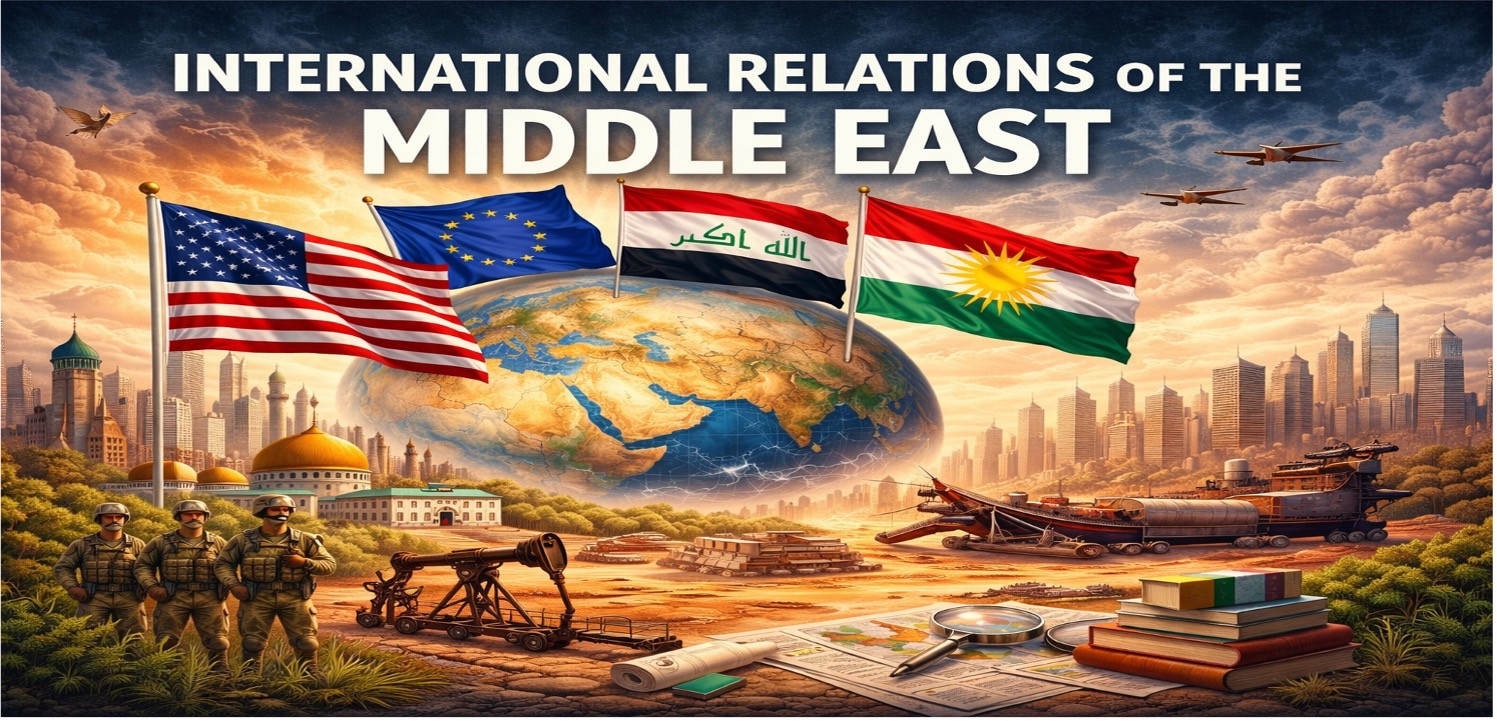
This course, taught by Dr. Bilal Wahab and Dr. Shwan Jamal Azeez, offers a comprehensive historical and analytical introduction to the international relations of the modern Middle East. It examines how global, regional, and domestic forces have shaped the political evolution of the region from the late Ottoman period to the present. Key themes include the emergence of the modern state system, colonialism and decolonization, nationalism and identity politics, the Cold War and its legacies, oil and political economy, authoritarian governance, revolutions, political Islam, regional security dilemmas, and foreign policymaking.
The course places particular emphasis on the interaction between local actors and external powers, exploring the roles of the United States, Europe, and regional powers in shaping Middle Eastern politics. Special attention is given to the Kurdish question, Islamist movements, jihadism, and the consequences of the Arab uprisings for regional order and state stability. Through engagement with theoretical approaches, historical case studies, and contemporary conflicts, students will develop critical analytical skills to assess the complexity, diversity, and ongoing transformations of Middle Eastern international relations.
- Teacher: Shwan Azeez (Sharey)