

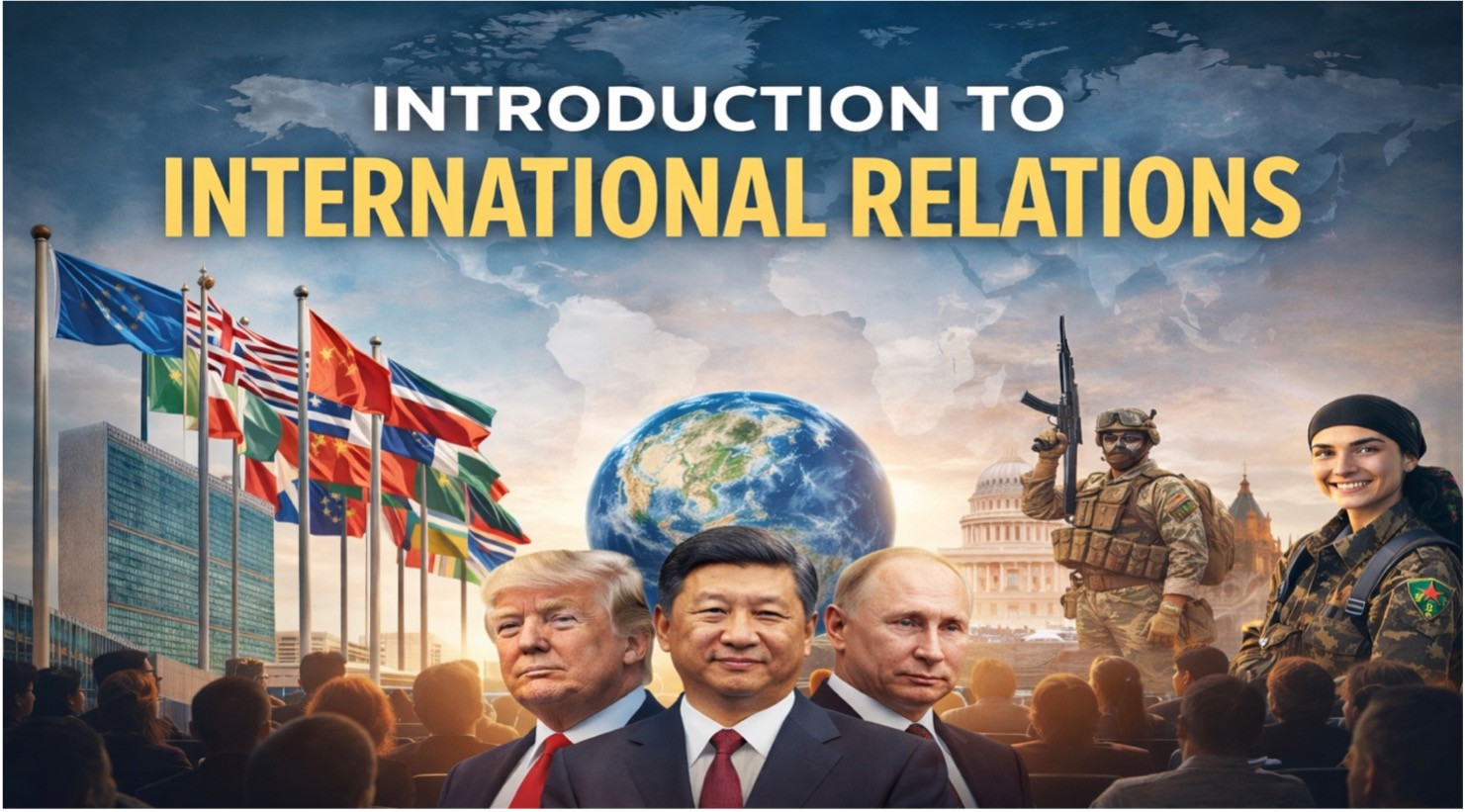
This course provides a foundational introduction to the study of International Relations (IR), focusing on the major theories, concepts, and historical developments that shape global politics. It examines how states and non-state actors interact within the international system and explores the enduring patterns of conflict and cooperation in world affairs. Students are introduced to key analytical frameworks, including realism, liberalism, constructivism, and critical approaches, and learn how these perspectives explain war, peace, power, security, and global governance.
The course traces the historical evolution of the international system from the Peace of Westphalia through the World Wars, the Cold War, and the post–Cold War era, highlighting major transformations in global order. Core topics include sovereignty and the modern state system, collective security and international institutions, balance of power, alliances, nationalism, globalization, economic interdependence, the role of non-state actors, technological change, and emerging global challenges. Special attention is given to contemporary issues such as regional conflicts, terrorism, information warfare, globalization, and future trends in world politics.
By combining theoretical insights with historical and contemporary case studies, the course equips students with essential analytical tools to critically assess international events, policy choices, and global trends. Students will develop a strong conceptual foundation for advanced study in international relations and related fields.
- Teacher: Shwan Azeez (Sharey)