

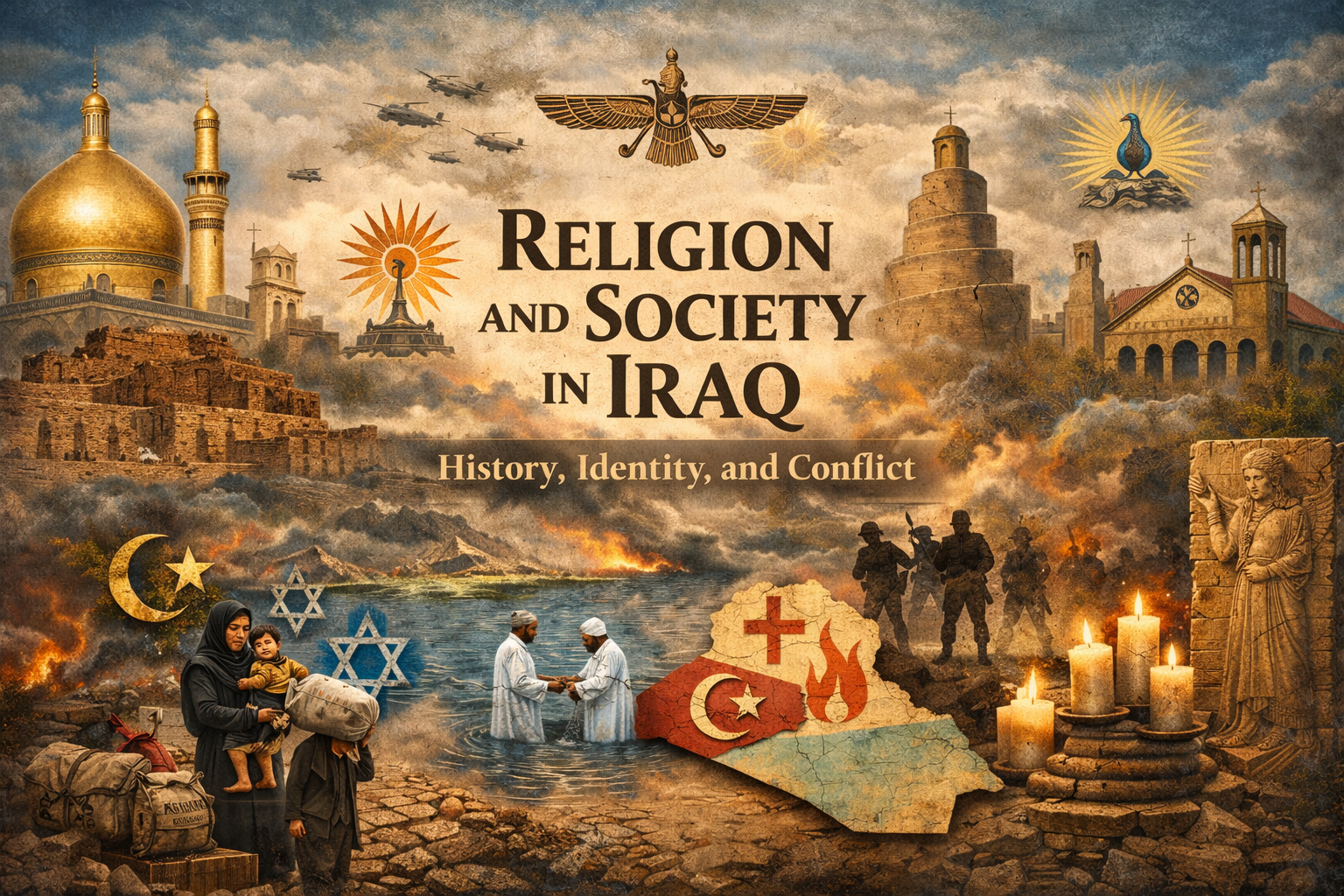
This course provides a historical and analytical introduction to Iraq’s diverse religious landscape, examining how religious beliefs, practices, and institutions have shaped Iraqi society from antiquity to the present. It explores the interaction between religion, state power, identity, and conflict, covering major religious communities including Sunni and Shi‘i Islam, Christianity, Judaism, Yazidism, Mandaeism, Kakaism, and Zoroastrianism, each situated within its historical, social, and political context.
Key themes include the formation of religious identities, sectarianism and coexistence, minority rights, forced migration, and religious persecution, as well as the impact of colonialism, state-building, war, authoritarianism, and extremist violence. Special attention is given to Shi‘i religious authority and the holy cities of Najaf and Karbala, the experiences of religious minorities since 2003, and the resilience of communities facing displacement and violence. Through theoretical approaches, historical case studies, and contemporary debates, the course equips students with critical tools to analyze the continuing role of religion in Iraq’s politics, identity, and social life.