

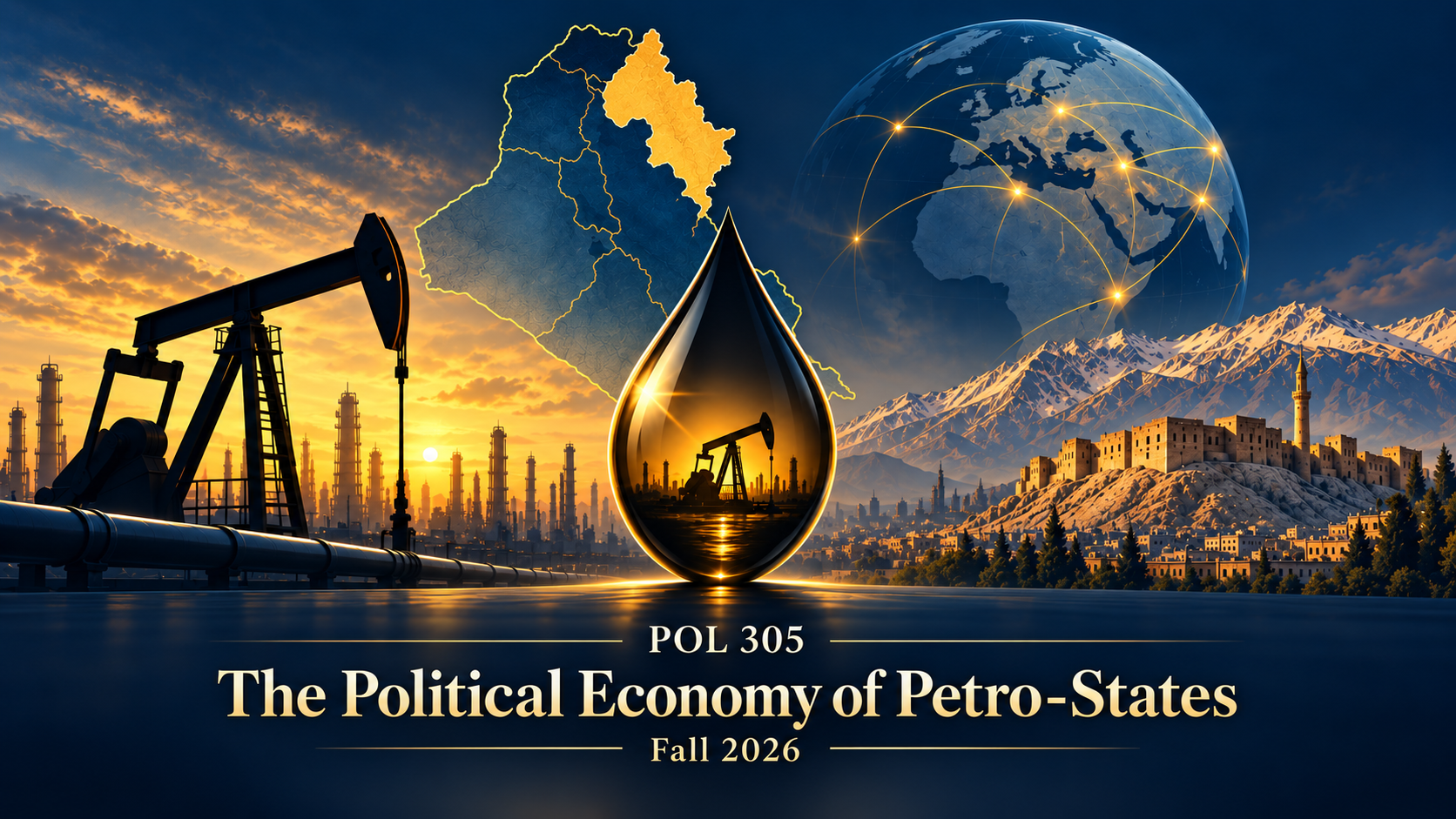
This course provides a historical and analytical introduction to the political economy of oil-producing states. It examines how petroleum resources shape political institutions, economic development, state–society relations, conflict, and international politics. Key themes include oil governance, resource nationalism, rentier states, the resource curse, oil revenues, democracy, authoritarianism, political violence, economic growth, and institutions.
Particular attention is given to Iraq and the Kurdistan Region, connecting broader theories of petro-state politics to issues of energy governance, sovereignty, competing interests, and resource management. Through theoretical approaches and comparative case studies, students will develop the analytical skills needed to assess why oil wealth produces different political and economic outcomes across states.
- Teacher: Shwan Azeez (Sharey)